+375 17 317 14 14 (sales dept.)


AmoxyBAG

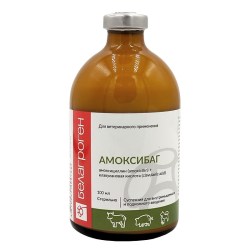
Veterinary drug AmoxyBAG
Treatment of infectious diseases in cattle, pigs, dogs and cats
- Broad spectrum of activity
- Synergistic effect of the drug’s active components
- Effective in treating infections of various organs and tissues
- Effective against secondary infections caused by stress and complications
- Fast-acting (maximum plasma levels reached within 1 hour)
- Antibacterial activity lasts for 48 hours
Therapeutic indications:
The drug is prescribed to cattle, pigs, dogs, and cats for bacterial diseases of the respiratory system, gastrointestinal tract, urogenital system, soft tissues, and skin (abscesses, phlegmon, pyoderma, inflammation of the paraanal glands, gingivitis), as well as for postoperative and postpartum infections, mastitis, and secondary bacterial infections caused by microorganisms sensitive to the active substances of the drug.
Pharmacotherapeutic group:
Penicillins in combinations.
Dosage form description:
Suspension for intramuscular and subcutaneous administration. In appearance, the drug is a white to light brown suspension.
Dark glass vials of 100 ml.
Composition of the veterinary drug:
1 ml of the drug contains 140 mg of amoxicillin (as amoxicillin trihydrate) and 35 mg of clavulanic acid (as potassium clavulanate) as active substances.
Pharmacological activity:
The combination of amoxicillin and clavulanic acid, the active substances of the drug, enhances each other's action and provides a broad spectrum of antimicrobial activity against most gram-positive and gram-negative microorganisms, including $\beta$-lactamase-producing strains: Streptococcus spp., Staphylococcus spp., Corynebacterium spp., Clostridium spp., Bacillus anthracis, Actinomyces bovis, Escherichia coli, Salmonella spp., Campylobacter spp., Klebsiella spp., Proteus spp., Pasteurella spp., Bacteroides spp., Haemophilus spp., Fusobacterium necrophorum, Moraxella spp., Actinobacillus pleuropneumoniae, and Actinobacillus lignieresii.
Amoxicillin is a semi-synthetic broad-spectrum penicillin antibiotic active against gram-positive and gram-negative microorganisms. Its mechanism of action consists in inhibiting transpeptidase, which leads to a disruption in the synthesis of peptidoglycan (the supporting protein) of the cell wall during the division and growth of the microorganism, thereby causing lysis of the bacterial cell.
Clavulanic acid exerts a weak antibacterial effect; it irreversibly binds beta-lactamase (forming a stable complex with it), protecting amoxicillin from enzymatic degradation and restoring bacterial sensitivity to the bactericidal action of amoxicillin at concentrations easily achieved in animal tissues following administration.
After administration, the active substances are well absorbed from the injection site into the blood and penetrate all organs, tissues, and body fluids, reaching maximum concentrations in the blood within 1–2 hours. The excretion of amoxicillin and clavulanic acid occurs predominantly unchanged via urine and partially via milk.
Dosage:
The drug is administered to animals once daily for 3–5 days in the following doses:
- for cattle and pigs, intramuscularly at 1 ml of the drug per 20 kg of animal body weight, which corresponds to 7 mg of amoxicillin and 1.75 mg of clavulanic acid per 1 kg of animal body weight, with no more than 15 ml of the drug injected into a single site;
- for dogs and cats, intramuscularly or subcutaneously at 0.1 ml of the drug per 2 kg of animal body weight, which corresponds to 7 mg of amoxicillin and 1.75 mg of clavulanic acid per 1 kg of animal body weight, with no more than 2 ml of the drug injected into a single site.
Before each use, the contents of the vial must be thoroughly shaken until a homogeneous suspension is obtained. Use only dry, sterile syringes and needles for administration. Do not mix the drug with other medicinal products in the same syringe.
Contraindications:
Contraindicated for use in animals with increased individual sensitivity to amoxicillin and beta-lactam antibiotics.
Overdose:
In case of an overdose, the animal may exhibit refusal of feed, vomiting, and impaired motor coordination.
Pregnancy and lactation:
The drug is permitted for use in pregnant and lactating females, as well as newborn animals, as prescribed by a veterinarian.
Special indications:
No specific behavioral or physiological effects were identified upon the initial administration or withdrawal of the drug. If a dose is missed, the treatment course should be resumed as soon as possible in accordance with the prescribed dosage and treatment regimen. Compensating for a missed dose by increasing the amount is not permitted.
Side effects and individual intolerance:
When used in recommended doses, allergic reactions may occur. In such cases, administration of the drug should be discontinued, and antihistamines and calcium preparations prescribed if necessary.
Withdrawal period:
Slaughter of animals for meat is permitted no earlier than 14 days after the last administration of the drug. In the event of forced slaughter prior to the specified period, the meat may be used for feeding carnivorous animals. Milk may be used for human consumption no earlier than 4 days after drug administration. Prior to the expiration of this period, milk may be used after heat treatment for feeding carnivorous animals.
Shelf-life:
2 years from the date of manufacture. Use of the drug after the expiration date is prohibited.
Storage conditions:
Store in a dark place at temperatures from 2 °C to 25 °C. Keep out of the reach of children. After the first opening of the vial, use within 14 days under recommended storage conditions.
 BAG-Amoxicillin LA
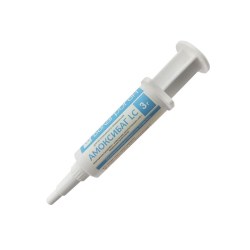 AmoxyBAG LC
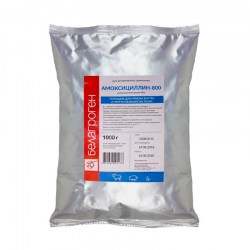 Amoxicillin-800
