+375 17 317 14 14 (sales dept.)


Vermectin
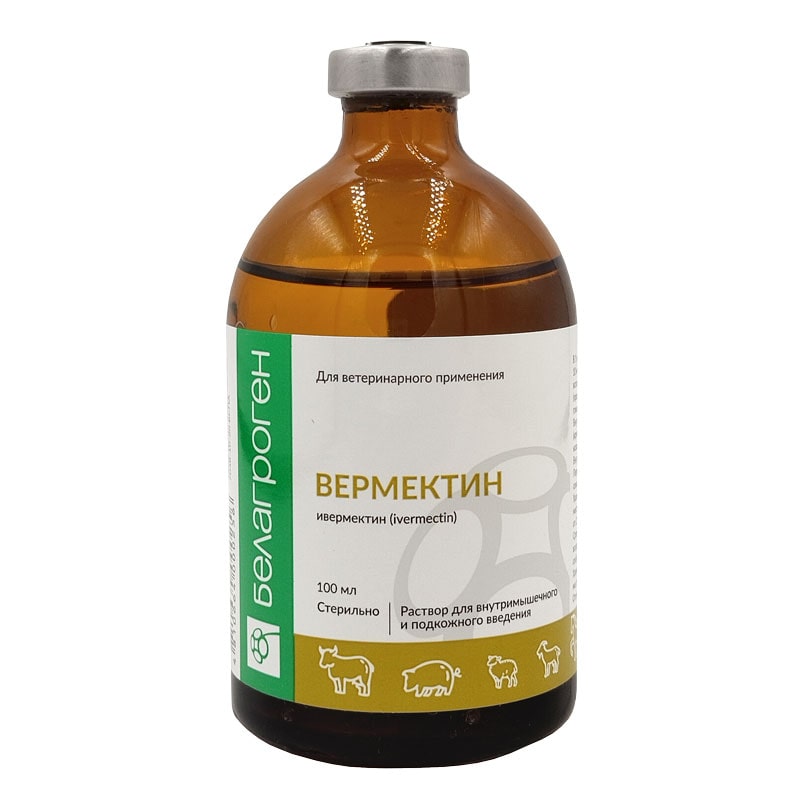
Veterinary drug VERMECTIN
Prevention and treatment of infectious diseases caused by parasitic nematodes and arthropods
- Broad spectrum of antiparasitic activity
- Effective against internal and external parasites
- Quick absorption
- Antiparasitic activity lasts for at least 10 days
- Single administration
Therapeutic indications:
Veterinary drug Vermectin is indicated for cattle, sheep, goats, horses and pigs for prevention and treatment of parasitic diseases of gastrointestinal tract and lungs, caused by parasitic nematodes and arthropods.
-
to cattle, sheep, goats in case of ostertagiosis, gemonchosis, trichostrongylosis, cooperiosis, nematodirosis, bunostomosis, strongyloidosis, esophagostomosis, trichurosis (trichocephalosis), dictyocaulosis, teliasiosis, hypodermatosis, edemagenosis, psoroptosis, sarcoptosis, estrosis, siphunculatosis and for control of ixodid ticks;
-
to pigs for ascariosis, strongyloidosis, esophagostomosis, trichurosis (trichocephalosis), metastrongylosis, sarcoptosis and hematopinosis;
-
to horses in parascariasis, strongyloidosis, strongylatosis, oxiurosis, teliasiosis, onchocerciasis, rhinestrosis, gasterophilosis, sarcoptosis, psoroptosis and for control of ixodid ticks.
Composition of the veterinary drug:
1 ml Vermectin solution for injection contains:
- Ivermectin 10 mg as an active substance;
Pharmacological activity:
Vermectin is an antiparasitic veterinary drug. The active substance of the drug is ivermectin with a broad spectrum of antiparasitic activity against larval and matured nematodes: Oesophagostomum spp., Ostertagia spp.( including encapsulated larvae), Haemonchus spp., Trichostrongylus spp., Cooperia spp., Bunostomum spp., Strongyloides spp., Dictyocaulus spp., Thelazia spp., Nematodirus spp., Trichuris (Trichocephalus) spp., Metastrongylus spp., Parafilaria bovicola, Ascaris suum etc.; larvae of subcutaneous and nasopharyngeal gadfly, such as Hypoderma и Oestrus; biting louse and lice, such as Bovicola, Haematopinus, Linognathus, Solenopotes; scabies mites, such as Psoroptes и Sarcoptes; ixodid ticks (Rhipicephalus microplus) etc.
Ivermectin binds to cell receptors of muscle and nerve tissue of parasites and increases the permeability of membranes for chloride ions, which leads to blockade of the electrical activity of nerve and muscle cells of nematodes and arthropods, their paralysis and death.
After administration of the veterinary drug ivermectin is rapidly absorbed from the injection site and penetrates into organs and tissues of the animal, which protects animals from reinfection for 10-14 days after treatment, and from reinfection with Dictyocaulus viviparus for up to 21 days. Ivermectin is excreted mainly with bile and urine; a small amount is excreted with milk in lactating animals.
In recommended doses, Vermectin does not have a mutagenic, teratogenic and embryotoxic effects. The veterinary drug is toxic to fish and bees.
Dosage:
The veterinary drug is administered in the following doses:
- Cattle, sheep, goats and horses – single doses of 1 ml/50 kg body weight (corresponds to 0.2 mg ivermectin per 1 kg of animal body weight), by intramuscular or subcutaneous injection; in case of psoroptosis – double doses at 7-10 days interval.
- Pigs – single doses of 1 ml/33 kg body weight (corresponds to 0.3 mg ivermectin per 1 kg of animal body weight), by intramuscular injection; in case of sarcoptosis – double doses at 10-14 days interval.
Vermectin should be injected slowly, before use heat the injection solution up to the body temperature of the animal.
Before mass treatment of animals, each batch of the drug shall be tested on a small group of animals (7-10 animals) of different age and fatness. If there are no signs of adverse effect within three days after administration of the drug, proceed to treatment of the entire livestock.
The drug is used against nematodes before stabling and in spring before putting out to pasture, against gadfly larvae - immediately after the end of gadfly flight activity, against arachnoentomosis pathogens - according to indications.
Precautions and adverse reactions:
Agitation, sialorrhea, increased bowel movements and urination, ataxia may occur in case of animal’s hypersensitivity. These symptoms usually disappear without use of therapeutic agents.
Do not use less than two weeks before calving and within two weeks after calving, and also in emaciated, sick and lactating animals.
Do not use simultaneously with veterinary drugs, that contain macrocyclic lactones.
Withdrawal period:
Animals must not be slaughtered for human consumption within 28 days after the last treatment. Meat of animals forcibly slaughtered earlier than the specified period may be used for feeding carnivores.
It is forbidden to use the drug in productive animals, whose milk is used as food for humans.
Storage conditions:
Store in a dark place at a temperature of 2 °C to 25 °C. Keep out of reach of children.
Shelf-life of the veterinary drug under appropriate storage conditions is 3 years from the date of manufacture. Shelf-life after first opening is 28 days.
 Vermectin zero
 Dectomectin
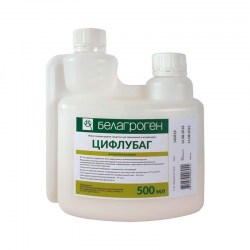 Cyflubag