+375 17 317 14 14 (sales dept.)


Dectomectin

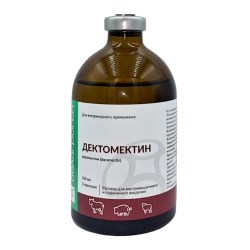
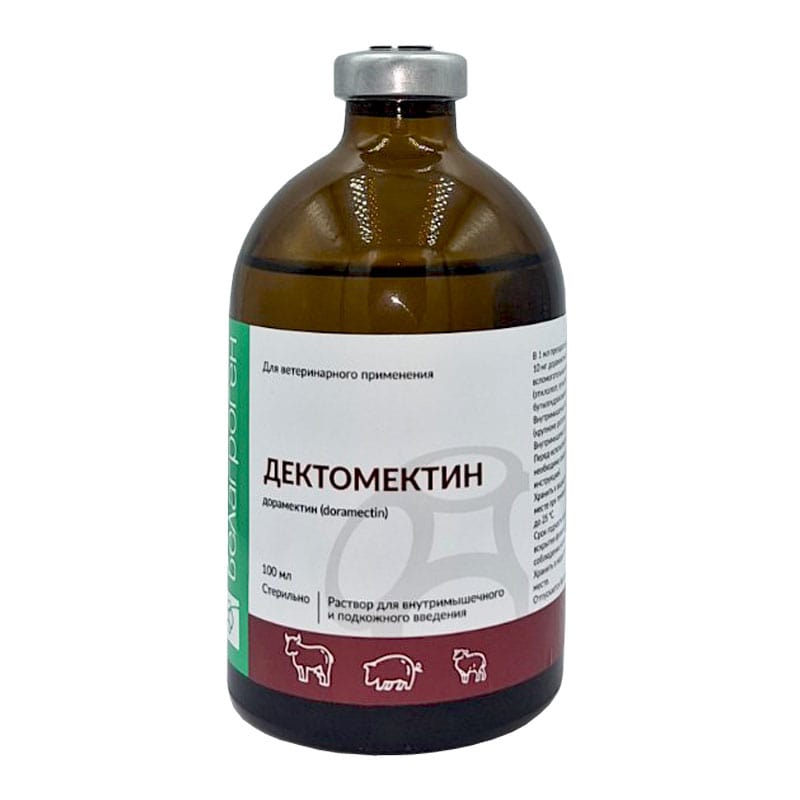
Veterinary drug DECTOMECTIN
Prevention and treatment of parasitic diseases caused by nematodes and arthropods
- Broad spectrum of antiparasitic activity
- Effective against internal and external parasites
- Long-lasting antiparasitic effect and protection against reinfection (up to 28 days)
- Easy absorbed from the injection site
Therapeutic indications:
The drug is prescribed for therapeutic and prophylactic purposes in cattle, sheep, and pigs for diseases caused by gastrointestinal nematodes, lungworms, subcutaneous tissue nematodes, lacrimal duct worms, larvae of subcutaneous and nasopharyngeal botflies, fly larvae, lice, mange mites, and ixodid ticks sensitive to doramectin.
Pharmacotherapeutic group:
Macrocyclic lactones.
Dosage form description
Solution for intramuscular and subcutaneous administration. In appearance, the drug is a clear, colorless to yellow solution.
Colorless or dark glass vials of 100, 250, and 500 ml.
Composition of the veterinary drug:
1 ml of the drug contains 10 mg of doramectin as the active substance.
Pharmacological activity:
Doramectin has a broad spectrum of antiparasitic action, having a destructive effect on nematodes (including encapsulated larvae, Oesophagostomum spp., Haemonchus spp., Bunostomum spp., Strongyloides spp., Dictyocaulus spp., Thelazia spp., Nematodirus spp., Trichuris (Trichocephalus) spp., Metastrongylus spp., Parafilaria bovicola, Ascaris suum, and others); larvae of subcutaneous and nasopharyngeal botflies of the genera Hypoderma and Oestrus; biting lice and sucking lice of the genera Bovicola, Haematopinus, Linognathus, and Solenopotes; mange mites of the genera Psoroptes and Sarcoptes; ixodid ticks (Rhipicephalus microplus), and others, including Trichostrongylus spp., Ostertagia spp., Cooperia spp.
Doramectin, by binding to receptors in the muscle and nerve tissue cells of parasites, increases membrane permeability to chlorine ions, which leads to the blockage of the electrical activity of nerve and muscle cells of nematodes and arthropods, their paralysis, and death.
Doramectin is easily resorbed from the injection site. The pharmacokinetic properties of doramectin ensure the prolonged maintenance of therapeutic concentrations of the drug in the blood of animals and their protection against parasitic diseases and reinfection for a long time (up to 28 days). Doramectin is excreted from the animal body primarily with feces, and in lactating animals, partially with milk. The drug in recommended doses does not have mutagenic, teratogenic, or embryotoxic effects.
Dosage:
The drug is administered to animals once in the following doses:
- to cattle and sheep intramuscularly (into the middle third of the neck) or subcutaneously (in the neck or shoulder blade area) at a dose of 1 ml of the drug per 50 kg of animal body weight, which corresponds to 0.2 mg of doramectin per 1 kg of animal body weight;
- to pigs intramuscularly (in the neck area behind the ear) at a dose of 1 ml of the drug per 33 kg of animal body weight, which corresponds to 0.3 mg of doramectin per 1 kg of animal body weight.
The drug should be injected slowly, after pre-heating it to the animal's body temperature. Before mass treatment of animals, each batch of the drug is tested on a small group of animals (7–10 heads) of different ages and body conditions. If there are no signs of adverse effects of the drug within three days after administering the drug, treatment of the entire livestock population is commenced.
Contraindications:
Contraindicated for use in animals with hypersensitivity to the components of the drug.
Overdose:
In case of overdose of the drug in animals, weakness, tremor, and increased salivation may be observed. Specific detoxification agents are absent; general measures aimed at eliminating the drug from the body are applied.
Pregnancy and lactation:
It is forbidden to use the drug in cows and sheep two weeks before calving and throughout the entire lactation period.
Special indications:
It is forbidden to use the drug in emaciated animals and animals sick with acute infectious diseases.
Side effects and individual intolerance:
Side effects and complications when using the drug in accordance with this instruction are generally not observed. In case of allergic reactions, the use of the drug is discontinued, antihistamines are prescribed if necessary, and symptomatic treatment is carried out.
Withdrawal period:
Slaughter of cattle and sheep for meat is allowed no earlier than 70 days, and pigs no earlier than 77 days after the last application of the drug. In case of forced slaughter of animals earlier than the specified periods, internal organs are subject to destruction, and the meat can be used for feeding carnivorous animals.
The use of the drug is prohibited in drugive animals whose milk is used for human food.
Shelf-life:
3 years from the date of manufacture. It is forbidden to use the drug after the expiration date.
Storage conditions:
In a place protected from light at a temperature from 15 °C to 25 °C. The drug should be stored in a place inaccessible to children. After the first opening of the vial, 28 days subject to storage conditions.
 Vermectin zero
 Vermectin
 Cyflubag

