+375 17 317 14 14 (sales dept.)


Mastocefur


Veterinary drug MASTOCEFUR
Prevention and treatment of bovine mastitis in dry-off programs
- Single administration
- Effective against a broad spectrum of microorganisms
- Long-acting drug (up to 28 days during the dry period)
Therapeutic indications:
The drug is used for therapeutic purposes in cows before transferring them to the dry period (simultaneous drying-off) and for mastitis in cows during the dry period caused by microorganisms sensitive to ceftiofur.
Pharmacotherapeutic group:
Cephalosporins with a broad spectrum of activity.
Dosage form description
Suspension for intramammary administration. In appearance, the drug is a suspension ranging from light yellow to brown in color.
Plastic syringes of 9 g closed with caps.
Composition of the veterinary drug:
One syringe (9 g) contains 500 mg of ceftiofur (as ceftiofur hydrochloride) as the active substance.
Pharmacological activity:
Ceftiofur, included in the composition of the drug, is a semi-synthetic third-generation cephalosporin with a broad spectrum of bactericidal activity against gram-negative and gram-positive bacteria, including Escherichia coli, Klebsiella spp., Corynebacterium spp., Streptococcus dysgalactiae, Streptococcus uberis, Streptococcus agalactiae, Staphylococcus aureus, coagulase-negative staphylococci (Staphylococcus xylosus, Staphylococcus warneri, Staphylococcus simulans), and others.
The mechanism of bactericidal action consists of the inactivation of penicillin-binding proteins involved in the synthesis of the main biopolymer of the bacterial cell wall—peptidoglycan, which prevents the cross-linking of peptidoglycan chains, leading to weakening of the cell wall and lysis of bacteria. When administered intramammarily, ceftiofur is poorly absorbed, which ensures its high concentrations in the udder. After applying the drug, a high concentration of the active substance in the udder secretion is maintained for 19–28 days. Ceftiofur and its metabolites are excreted from the animal's body primarily with urine.
Dosage:
Before simultaneous drying-off and administration of the drug, mandatory diagnostics for latent mastitis are carried out, and if inflammation is detected, treatment is performed; upon recovery, cows are dried off using the drug.
The drug is administered intramammarily once into all quarters of the udder at the end of the lactation period before transfer to the dry period, but no later than 30 days before the expected calving, at a dose of 9 g (one syringe) per one quarter of the udder.
Before applying the drug, milk is milked out from all quarters of the udder, teats are treated with an antiseptic agent (cleansing wipe) approved for these purposes, then the syringe cannula is inserted into the teat canal and the contents are gently squeezed out. The contents of one syringe are injected into each quarter of the udder. After this, the cannula is removed, the tip of the teat is pinched with fingers and the teat is lightly massaged from bottom to top for better distribution of the drug.
Contraindications:
Contraindicated in animals with hypersensitivity to the components of the drug, including cephalosporins and other β-lactam antibiotics.
Overdose:
Symptoms of overdose upon application of the drug in animals have not been identified.
Pregnancy and lactation:
It is prohibited to use the drug during lactation and less than 30 days before calving.
Special indications:
No special indications.
Side effects and individual intolerance:
Side effects and complications are generally not observed when the drug is used in accordance with this instruction. In rare cases, if allergic reactions occur, the drug is discontinued and antihistamines and calcium preparations are prescribed.
Withdrawal period:
Slaughter of animals for meat is permitted no earlier than 16 days after the last application of the drug. Meat from animals forcibly slaughtered before the expiration of the specified period may be used to feed carnivorous animals. In case of accidental administration during lactation and less than 30 days before calving, milk can be used for food purposes no earlier than 30 days after the last application of the drug. Milk obtained before the expiration of the established period from healthy udder quarters is permitted to be used after boiling for feeding calves. Milk from diseased quarters is disinfected by boiling and disposed of.
Shelf-life:
2 years from the date of manufacture. Do not use the drug after the expiration date.
Storage conditions:
In a place protected from light at temperatures from 15 °C to 25 °C. The drug should be kept out of the reach of children.
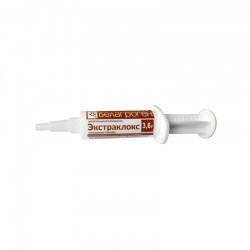 Extraclox
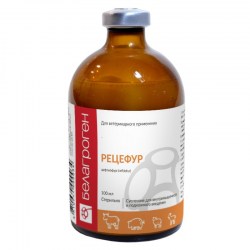 Recefur
