+375 17 317 14 14 (sales dept.)


Respiroflor 300


Veterinary drug RESPIROFLOR 300
Treatment of pleuropneumonia (lung fever), atrophic rhinitis, BRD (bovine respiratory disease) and other respiratory diseases
- Broad spectrum of antibacterial activities
- Powerful effect (more active than thiamphenicol and chloramphenicol)
- Maximum efficacy is reached in 1-2 hours after the drug administration
- The therapeutic concentration is maintained for 48 hours
- Less painful subcutaneous injection (for cattle)
Therapeutic indications:
RESPIROFLOR 300 is used for the treatment of
- pigs with actinobacillary pleuropneumonia, infectious atrophic rhinitis, as well as other contagious diseases of bacterial etiology caused by microorganisms sensitive to florfenicol;
- cattle with respiratory diseases, as well as other contagious diseases of bacterial etiology caused by microorganisms sensitive to florfenicol.
Composition of the veterinary drug:
1 ml of the preparation contains:
- 300 mg of florfenicol as an active substance.
Pharmacological activity:
Florfenicol is the active substance of the drug with a broad spectrum of antibacterial action against Actinobacillus pleuropneumoniae, Pasteurella multocida, Mannheimia haemolytica, Bordetella bronchiseptica, Haemophilus spp., Staphylococcus aureus, Streptococcus spp., Fusobacterium necrophorum, Bacteroides melaninogenicus, Moraxella bovis, Klebsiella pneumoniae, Micrococcus spp..
The mechanism of the bacteriostatic action of florfenicol is the inhibition of protein synthesis at the ribosomal level. Florfenicol, binding to the 70S ribosome in the bacterial cell protoplasm, blocks the enzyme peptidyltransferase, which leads to inhibition of protein synthesis in microorganisms sensitive to florfenicol. Florfenicol is active, among others, against bacteria that produce acetyltransferase.
Upon intramuscular or subcutaneous administration of the drug, florfenicol rapidly enters the bloodstream and penetrates into almost all organs and tissues, reaching maximum concentration 1–2 hours after administration. After a single injection, the therapeutic concentration of florfenicol is maintained in the body for 48 hours. Florfenicol and its metabolites are eliminated from the body primarily via urine and to a lesser extent via feces.
Dosage:
For pigs, the drug is administered intramuscularly twice with a 48-hour interval at a dose of 1 ml of the drug per 20 kg of animal body weight, which corresponds to 15 mg of florfenicol per 1 kg of animal body weight.
For cattle, the drug is administered intramuscularly or subcutaneously. For intramuscular administration, the drug is given twice with a 48-hour interval at a dose of 1 ml of the drug per 15 kg of animal body weight, which corresponds to 20 mg of florfenicol per 1 kg of animal body weight. For subcutaneous administration, the drug is given once at a dose of 2 ml of the drug per 15 kg of animal body weight, which corresponds to 40 mg of florfenicol per 1 kg of animal body weight.
Due to a possible pain reaction upon injection, the maximum volume of the drug per injection site should not exceed: for cattle – 10 ml, for pigs – 8 ml, for calves – 4 ml, for piglets – 2 ml.
Contraindications:
The use of the drug is contraindicated in animals with increased individual sensitivity to the components of the drug, as well as in animals with severe renal and hepatic insufficiency.
Overdose:
In case of drug overdose, animals may experience diarrhea and anorexia, as well as an inflammatory reaction at the injection site. Reduced feed and water intake, decreased weight gain, and in pigs – perianal erythema and edema may occur. These symptoms resolve spontaneously without the need for symptomatic treatment.
Pregnancy and lactation:
The drug is prohibited for use in pregnant cows, pregnant and lactating sows, boars, and breeding bulls.
Special indications:
No specific effects of the drug upon first use or upon its cancellation have been identified.
Side effects and individual intolerance:
No specific effects of the drug upon first use or upon its cancellation have been identified. Do not miss the time intervals between administrations of the drug, as this will lead to a decrease in the therapeutic concentration of florfenicol in the animal's body. If the interval between two administrations of the drug is increased, the treatment regimen should be restarted according to the instructions.
Side effects and individual intolerance:
Side effects and complications when using the drug in accordance with these instructions are generally not observed. After administration of the drug, some animals may experience redness and swelling of the perianal tissues, and soft feces. These changes do not require treatment, resolve quickly, and do not affect the physiological state of the animals.
Interaction with other veterinary drugs:
Simultaneous use of the drug with amphenicols, antibiotics of the penicillin group, cephalosporins, and fluoroquinolones is not allowed to avoid side effects and complications, nor is mixing it in the same syringe with other medicinal products.
Withdrawal period:
The use of the drug is prohibited in cows whose milk is used for human consumption.
Pigs must not be slaughtered for human consumption before 14 days, cattle – before 34 days after the last drug administration (intramuscular injection) and 42 days (subcutaneous injection). Meat of animals forcibly slaughtered earlier than the specified period expires may be used for feeding carnivores.
Storage conditions:
The drug should be stored in a dark place at a temperature between 2 °C to 25 °C.
Shelf-life:
Shelf-life of the veterinary drug is 3 years from the date of manufacture. Shelf-life after the first opening of the bottle is 28 days under appropriate storage conditions.
 Megluflor
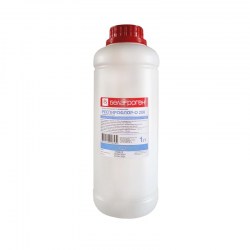 Respiroflor-O 200
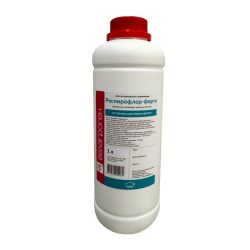 Respiroflor-O 300