+375 17 317 14 14 (sales dept.)


Respiroflor-O 100
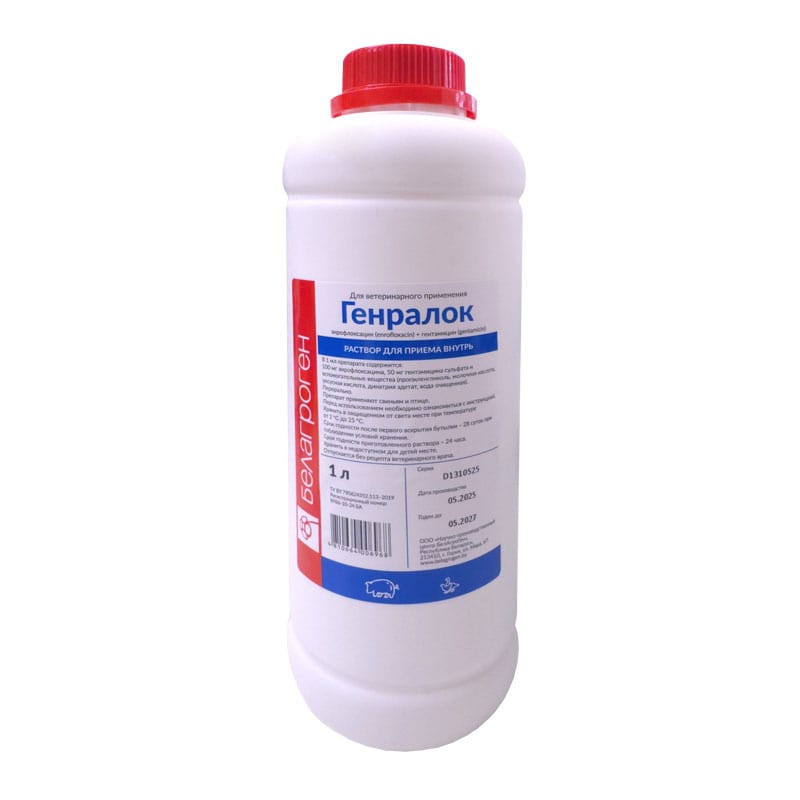

Veterinary drug GENRALOK
Treatment of various infectious diseases in pigs and poultry
- Synergistic action of two active components
- Broad spectrum of antibacterial activity
- For oral use
- Used for mycoplasmosis and chronic respiratory diseases
- For intestinal diseases and swine dysentery
- Maximum antibiotic concentration is reached within 1.5–2 hours and remains for 6 hours
- Therapeutic concentration is maintained for 24 hours
Therapeutic indications:
The drug is used for farm poultry (broilers, broiler breeder flocks, replacement pullets) and pigs in cases of colibacillosis, pasteurellosis, salmonellosis, streptococcosis, mycoplasmosis, chronic respiratory diseases, necrotic enteritis, infectious atrophic rhinitis, and swine dysentery, as well as for other bacterial infections caused by pathogens that are sensitive to the components of the product.
Composition of the veterinary drug:
1 ml of the drug contains:
- 100 mg of enrofloxacin
- 50 mg of gentamicin sulfate as active substances.
Pharmacological activity:
Enrofloxacin and gentamicin, which are part of the drug, exhibit synergism, thereby enhancing the antimicrobial effect and expanding the spectrum of the product's activity. The combination of active substances is highly effective against gram-negative bacteria (Escherichia coli, Enterobacter spp., Klebsiella spp., Salmonella spp., Proteus spp., Campylobacter spp., Pseudomonas aeruginosa, Bordetella spp., Pasteurella spp., Haemophilus spp., Actinobacillus spp., Brucella spp., Treponema hyodysenteriae) and gram-positive bacteria (Clostridium spp., Streptococcus spp., Staphylococcus spp., including beta-lactamase-producing strains), as well as against Mycoplasma spp., Chlamydia spp., Ureaplasma spp.
The bactericidal mechanism of enrofloxacin involves inhibition of the enzyme gyrase, which affects DNA helix replication in the bacterial cell.
Enrofloxacin is well absorbed from the gastrointestinal tract and rapidly distributed throughout the body. In organs and tissues, the concentration of the drug exceeds the blood concentration by 2–3 times. Particularly high concentrations of enrofloxacin are found in the lungs, liver, kidneys, bones, and lymphatic organs. In the body, enrofloxacin is partially metabolized into the active metabolite ciprofloxacin and is excreted mainly in the urine and bile, and in lactating females, also in milk.
The mechanism of action of gentamicin involves inhibition of protein synthesis in the microbial cell at the ribosomal level. When administered orally, gentamicin is poorly absorbed through an intact intestinal wall; however, absorption increases if the intestinal mucosa is damaged due to inflammation. Gentamicin is excreted unchanged, mainly with feces.
The maximum concentration of the drug in the blood is reached within 1.5–2 hours and remains for 6 hours, while the therapeutic concentration is maintained for 24 hours after administration.
Dosage:
The drug is administered orally for 3–5 days at the following doses:
-
For farm poultry, the drug is administered individually or in groups with drinking water at a dose of 0.5–1 ml of the drug per 1 liter of water or 0.1 ml of the drug per 1 kg of body weight, depending on the severity of the pathological process. In cases of mixed infections or chronic forms of disease, the treatment course may be extended up to 7 days.
-
For pigs, the drug is administered individually or in groups at a dose of 5 ml of the drug per 100 kg of body weight, mixed with drinking water. In the treatment of dysentery, the dose should be increased to 10 ml of the drug per 100 kg of body weight.
The prepared solution is intended to be used within 24 hours. The solution should be freshly prepared each day. During the treatment period, animals and poultry must receive only water containing the drug.
Precautions and adverse reactions:
When used in accordance with the instruction, side effects and complications are generally not observed.
Do not use the drug in animals with hypersensitivity to florfenicol and other components of the veterinary drug. Do not use the drug in animals with liver and kidney dysfunctions.
In animals with increased individual sensitivity, seizures, tremors, vomiting, anorexia, and hemolytic anemia may occur. In such cases, the use of the drug should be discontinued, and the animal should be given antihistamines and symptomatic therapy.
In cases of overdose in animals and poultry, excitation may be observed, followed by severe depression; rapid breathing and increased heart rate may also occur. Prolonged use in piglets may lead to arthropathy. In such cases, the use of the drug should be discontinued, and symptomatic therapy should be administered if necessary.
It is not recommended to use the product in combination with bacteriostatic antibiotics (macrolides, tetracyclines) due to the possible antagonistic effect, as well as with theophylline, polyether ionophores, nonsteroidal anti-inflammatory drugs, and magnesium and calcium preparations.
After the first administration and cancellation, no peculiarities of the drug use are revealed.
Avoid missing the next dose of the drug, as it may lead to the reduced therapeutic effect. If administration of the veterinary drug is missed, resume it in the same dosage and according to the same treatment scheme as soon as possible. Do not increase the dose to compensate the missing one.
Do not use the drug in farrowing sows, sows during the lactation period and in breeding boars.
Do not use in poultry, which eggs are used for human consumption, as well as to repair young chickens less than 2 weeks before the start of egg laying.
Withdrawal period:
Pigs and poultry must not be slaughtered for human consumption before 14 days after the last drug administration. Meat of animals and poultry forcibly slaughtered earlier than the specified period expires may be used for feeding carnivores.
Storage conditions:
The drug should be stored in a dark place at a temperature between 2 °C to 25 °C.
Shelf-life:
Shelf-life of the veterinary drug is 2 years from the date of manufacture. Shelf-life after the first opening of the bottle is 28 days under appropriate storage conditions. The prepared working solution should be used within 24 hours. Do not use the drug after the expiry date.
 Respiroflor 300
 Respiroflor-O 200
 Respiroflor-O 300