+375 17 317 14 14 (отдел продаж)


Oxytocin 10


Veterinary drug OXYTOCIN 10
Treatment of gynecological diseases in female animals
- Increases tone and enhances muscles contraction of the uterus
- Effective against various gynecological diseases
- Shows physiological activity in 1-3 minutes after administration
- Quickly excreted from the body
- No withdrawal period for meat and milk
Therapeutic indications:
The drug is used in female animals for weak labor activity (contractions and straining), uterine bleeding, retained placenta, atony, hypotonia, postpartum endometritis and subinvolution of the uterus, mastitis, and reflex agalactia.
Composition of the veterinary drug:
1 ml of the preparation contains:
- 10 IU of oxytocin as an active substance.
Pharmacological activity:
OXYTOCIN 10 is a hormonal drug with oxytocin as the active substance of the drug. Oxytocin is a synthetic analogue of a polypeptide hormone produced by the posterior lobe of the pituitary gland in mammals. It increases the permeability of myofibrils to sodium ions, raising tone and enhancing contraction of the smooth musculature of the uterus and the myoepithelial cells surrounding the alveoli of the mammary gland. Oxytocin has a relaxing action on smooth vascular muscles, that leads to temporary arterial hypotension and reflex tachycardia.
With subcutaneous and intramuscular administration of the drug, the effect of oxytocin on the smooth musculature of the uterus manifests within 1–3 minutes, but is short-lived, lasting from 20 to 30 minutes. The drug is inactivated in the liver and kidneys. A small amount of oxytocin is excreted in the urine. The half-life in the animal body is 5–7 minutes.
Dosage:
The drug is injected subcutaneously, intramuscularly or may be administered as an intravenous infusion in the following doses (Table 1):
Table 1.
|
Animal species |
Injection method and dosage, IU |
|
|
Subcutaneously, intramuscularly |
An intravenous infusion |
|
|
Нorses and cows |
30-60 |
20-40 |
|
Sows (up to 200 kg) |
30 |
20 |
|
Goats and sheep |
10-15 |
8-10 |
|
Dogs |
5-10 |
2-7 |
|
Cats |
3 |
2-3 |
When the drug is used to stimulate parturition in cows and female horses, the dosage may be increased by 1.5 times.
During the postpartum period, the drug is used to accelerate the involution of uterus.
The drug is used in female dogs in case of uterine prolapse after manual repositioning to accelerate its
involution.
Contraindications:
Do not use in animals with hypersensitivity to the components of the drug, during obstetrical assistance in cases of large fetus and narrow pelvis, deformities, malpresentation of the fetus, uterine torsion, closed cervix, as well as multiple pregnancies and the presence of scars on the uterine wall.
Overdose:
The manifestation of the consequences of drug overdose depends on the condition of the uterus and the position of the fetus (or fetuses). The development of hypertonic or tetanic contractions can lead to secondary weak contractions and straining, uterine rupture, fetal hypoxia and its death. In this case, the use of the drug is discontinued and symptomatic therapy is performed (reduction of fluid administration, forced diuresis, hypertonic sodium chloride solution, normalization of electrolyte balance).
Pregnancy and lactation:
The drug is prohibited for use in pregnant animals.
Special indications:
No specific effects of the drug upon first use or upon its cancellation have been identified.
Side effects and individual intolerance:
As a rule, no side effects or complications are observed when using the drug in accordance with these instructions.
Interaction with other veterinary drugs:
It is not recommended to use the drug together with fibrinolysin, norepinephrine, and meterazine.
Withdrawal period:
No withdrawal period for milk and meat. Meat and milk may be used for human consumption without any restrictions after the last drug administration.
Storage conditions:
Store in a dark place at a temperature between 2 °C to 8 °C.
Shelf-life:
Shelf-life of the veterinary drug is 2 yearss from the date of manufacture. Shelf-life after first opening of the bottle (vial) is 28 days under appropriate storage conditions.
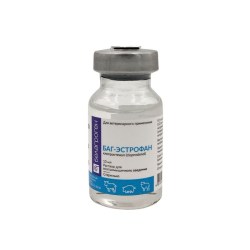 BAG-Estrofan
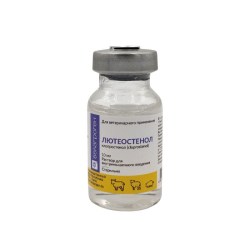 Luteostenol
 Uterobag