+375 17 317 14 14 (sales dept.)


Enmitryl 100

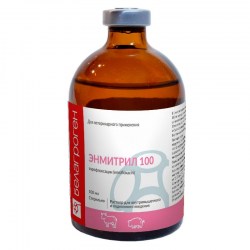
Veterinary drug ENMITRYL 100
Treatment of a wide range of infectious diseases in cows and pigs
- Broad spectrum of activity
- Effective in the treatment of multi-infections
- Single administration
- Fast acting and long-lasting therapeutic effect
- High stability and bioavailability
- Optimal dosage for large farm animals
Therapeutic indications:
The drug is prescribed for therapeutic purposes in cattle and pigs for respiratory pathologies (enzootic pneumonia, infectious atrophic rhinitis), gastrointestinal tract diseases, urogenital system disorders (mastitis-metritis-agalactia syndrome), septicemia, and other conditions caused by pathogens sensitive to enrofloxacin.
Pharmacotherapeutic group:
Naphthyridine derivatives, quinolones, fluoroquinolones.
Dosage form description
Solution for intramuscular and subcutaneous administration. In appearance, the drug is a clear solution ranging from colorless to yellow.
Glass vials of colorless or dark glass containing 100 ml.
Composition of the veterinary drug:
1 ml of the drug contains 100 mg of enrofloxacin as the active substance.
Pharmacological activity:
Enrofloxacin, the active substance of the drug, exhibits a broad spectrum of antibacterial and antimycoplasmal action. Enrofloxacin is active against gram-positive and gram-negative microorganisms, such as: Escherichia coli, Salmonella spp., Pasteurella multocida, Mannheimia haemolytica, Bordetella bronchiseptica, Streptococcus spp., Klebsiella spp., Pseudomonas aeruginosa, Campylobacter spp., Corynebacterium pyogenes, Proteus spp., Mycoplasma spp., Actinobacillus spp., Listeria monocytogenes, Haemophilus spp., Clostridium perfringens, and Staphylococcus spp.
The mechanism of action of enrofloxacin involves the inhibition of the enzyme gyrase, which affects DNA helix replication in bacterial cells. Upon parenteral administration, enrofloxacin is rapidly absorbed from the injection site and penetrates most organs and tissues of the body. The maximum concentration of enrofloxacin in the blood is reached within 30–60 minutes, and the therapeutic concentration is maintained for 72 hours after administration. Enrofloxacin is excreted from the body primarily unchanged and partially as the metabolite ciprofloxacin, predominantly via urine and bile. In recommended doses, the drug is well tolerated by animals and does not exhibit embryotoxic, teratogenic, or hepatotoxic effects.
Dosage:
The drug is administered once to:
- cattle subcutaneously at a dose of 7.5 mg of enrofloxacin per 1 kg of body weight, which corresponds to 7.5 ml of the drug per 100 kg of body weight;
- pigs intramuscularly at a dose of 7.5 mg of enrofloxacin per 1 kg of body weight, which corresponds to 7.5 ml of the drug per 100 kg of body weight.
If necessary, administration is repeated after 72 hours. Due to a potential pain reaction, the drug should not be administered to cattle at a single site in a volume exceeding 15 ml, nor to pigs and calves in a volume exceeding 7.5 ml.
Contraindications:
Contraindicated in animals with hypersensitivity to the components of the drug. The drug should not be used in cases of significant cartilage development disorders, nervous system lesions accompanied by convulsions, or when microorganisms resistant to fluoroquinolones are isolated from the sick animal.
Overdose:
In case of overdose, animals may exhibit decreased appetite, depression, vomiting, and diarrhea. There is no specific antidote; symptomatic treatment is administered in the event of an overdose.
Pregnancy and lactation:
The drug is permitted for use in pregnant and lactating animals.
Special indications:
No specific effects were identified upon initial use of the drug.
Side effects and individual intolerance:
Side effects and complications are generally not observed when using the drug in accordance with these instructions. In individual animals, transient gastrointestinal dysfunction (vomiting, diarrhea) may occur following administration. Irritation may appear at the injection site, which resolves spontaneously. In animals with increased individual sensitivity to the drug's components, allergic reactions may occur. In such cases, antihistamines and symptomatic treatment are prescribed as necessary.
Withdrawal period:
Slaughter of animals for meat is permitted no earlier than 14 days after drug administration. In cases of emergency slaughter prior to the specified period, the meat may be used to feed carnivorous animals. Milk is permitted for use no earlier than 10 days after administration. Prior to the expiration of this period, milk may be used for animal feed following heat treatment.
Shelf-life:
3 years from the date of manufacture. Use of the drug after the expiration date is prohibited.
Storage conditions:
Store in a dark place at temperatures between 15 °C and 25 °C. If stored below the specified temperature, precipitation may occur; to dissolve it, the drug should be heated in a water bath at 25 °C to 30 °C and mixed by shaking until the precipitate dissolves. The drug must be kept out of the reach of children. After initial opening of the vial, it remains stable for 28 days under appropriate storage conditions.
 Enrofloxaferon-B
 Recombinant bovine interferon (IBR)
