+375 17 317 14 14 (sales dept.)


Unidez Trio

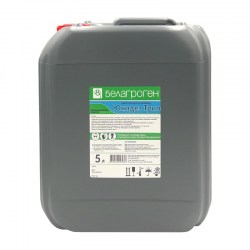
Disinfectant UNIDEZ TRIO with a wide spectrum of action
- Pronounced bactericidal, fungicidal and virucidal effect
- Economy (0.25-5% working solution)
- Efficient against viral diseases of birds (avian influenza, infectious anemia of chickens, infectious bursitis of chickens, avian reovirus infection)
- Effective against necrobacillosis (foot rot); suitable hoof disinfection
- Efficient against classical and african swine fever
- Effective against foot-and-mouth disease and circovirus infection in pigs
- Disinfection of premises, equipment, items, vehicles and workwear
- Does not cause corrosion and other changes in treated materials
- Suitable for disinfection of hatching eggs
- Non-sensitizing and non-irritating
Application:
- UNIDEZ TRIO is used for preventive and forced disinfection of objects of veterinary supervision, including:
livestock, poultry and fur-breeding premises, the technological equipment located in them, auxiliary facilities, incubators, hatchers, as well as eggs before placing them in an incubator, egg stores, dairy blocks and feed kitchens, sanitary equipment, sanitary slaughterhouses, open objects (ramps , overpasses, platforms), containers and overalls; - production facilities, technological equipment and the territory of biological industry enterprises, as well as containers and overalls;
- vehicles, including road, rail, water and air transport used to transport animals and poultry, as well as raw materials and products of animal origin;
- veterinary clinics (stations), nurseries, laboratories, vivariums, circuses and zoos.
Composition:
The disinfectant contains a composition of two quaternary ammonium compounds (alkyldimethylbenzylammonium chloride 17.1%, didecyldimethylammonium chloride 7.8%) and glutaraldehyde 10.7% as active substances.
Properties:
The disinfectant has a wide spectrum of action. It is active against gram-positive and gram-negative bacteria (including Mycobacterium tuberculosis and spore-forming forms), viruses (including etiologic agents of avian influenza, infectious chicken anemia, infectious bursitis of chickens and reovirus infection of birds, respiratory reproductive syndrome, african and classical swine fever, foot and mouth disease, swine circovirus type 2) and fungi (including spore-forming forms, yeasts and molds).
Quaternary ammonium compounds containing in UNIDEZ TRIO violate the permeability of cell membranes, cause denaturation of proteins, improve the penetration of active substances through the cell wall of the microorganism. The mechanism of action of glutaraldehyde is the alkylation of amino-sulfhydride groups of proteins and suppression of their synthesis. Also, glutaraldehyde inhibits the transmembrane mechanisms of ion transfer, inactivates periplasmic enzymes and dehydrogenases of microorganisms, and promotes dehydration of the bacterial cell.
All active ingredients in the product are complementary and act synergistically.
In the recommended concentrations, the agent does not have an irritating and sensitizing effect.
The working solution of the disinfectant is not corrosive and does not damage the treated surfaces. The biodegradability of the product is more than 95%.
Usage:
Disinfection is carried out by methods of mist irrigation, wiping, immersion, aerosol method and by foam application.
Disinfection of livestock buildings is carried out in the absence of animals.
The working solution is prepared by adding the appropriate amount of the agent to tap water in accordance with the calculations given in the table.
|
Concentration of working solution, % |
To obtain 10 L of working solution mix |
|
|
Disinfectant, ml |
Water, L |
|
|
0,25 |
25 |
9,975 |
|
0,5 |
50 |
9,95 |
|
1 |
100 |
9,9 |
|
2 |
200 |
9,8 |
Disinfection
Prophylactic disinfection of objects with a smooth surface is carried out by methods of mist irrigation, immersion, foam application or wiping the disinfected surfaces with a working solution at a concentration of 0.25% and a consumption rate of 0.25 L / m2 and an exposure time of 20 minutes. Rough surfaces are disinfected with an aqueous working solution at a concentration of 0.25% at a consumption rate of 0.35 L / m2 and an exposure time of 30 minutes.
Forced disinfection (current and final) for infectious diseases of bacterial (including tuberculosis) and viral etiology on objects with smooth or rough surfaces is carried out by methods of mist irrigation, immersion, foam application or wiping the disinfected surfaces with a working solution at a concentration of 0.5 % at a consumption rate of 0.5 L / m2 and an exposure of 1 hour.
For especially dangerous infectious diseases, a single treatment by irrigation with a 1% solution of the agent with an exposure of 3 hours at a consumption rate of 0.5 L/ m2 or a 2% solution with an exposure of 1 hour at a consumption rate of 0.25 L / m2 for smooth surfaces and 0, 35 L / m2 for rough surfaces.
In case of African swine fever, a single treatment is recommended by irrigation with a 0.25% working solution of the disenfectant with an exposure of 60 minutes or a 0.5% working solution of the disenfectant with an exposure of 30 minutes at a consumption rate of 0.25 l / m2 for smooth surfaces and 0.35 l / m2 for rough surfaces.
For prophylactic disinfection of hatching eggs by immersion, a 0.1% working solution of the agent is used. The exposition is 15 minutes. Hatching eggs can also be processed in a disinfection chamber using cold mist generators. In this case, use a 10% working solution of the product based on a consumption of 20 ml / m3.
Disinfection (prophylactic or forced) by aerosol spraying of a working solution is carried out using cold or hot fog generators. The working solution is prepared at a concentration of 25%. The volume of working solution is calculated based on the value of 1 ml per 1 m3 of the room, the exposure is 3 hours.
The premises during disinfection with volumetric aerosols must be empty, sealed, with ventilation turned off.
After the expiration of the established disinfection period, places of possible accumulation of disinfectant residues that are accessible to animals (including feeders, drinkers and other surface areas) should be washed with water. Rinsing of disinfectant residues from other surfaces is not required. Animals are allowed into the premises after ventilation and the disappearance of the smell of the agent.
It is allowed to carry out local disinfection of individual stalls free from animals, cages, pieces of equipment and areas of surfaces while ensuring intensive ventilation and the absence of people and animals in the immediate vicinity of the treated objects. The treatment is carried out with a 0.25% solution of the agent by methods of generating foam, soaking or wiping the surface.
Sanitization of the premises in the presence of animals and birds is carried out using cold fog. Use 0.5% working solution of a disinfectant based on the consumption of 2–5 ml of working solution per 1 m3. For better fog quality, glycerin is added to the working solution in an amount of 5–10% of the total volume. Processing should be carried out with the ventilation turned off. If it is impossible to turn off ventilation, the flow rate of the working solution should be increased to 10–25 ml per 1 m3.
Disinfection barriers and mats are filled with a 0.25% working solution of the agent; for hoof treatment, baths are filled with a 0.5% solution. Replace the disinfectant solution as needed, but at least once every 7 days. It is recommended to add antifreeze in winter.
Other cautions
The product is not compatible with anionic surfactants and their solutions.
At negative temperatures (up to minus 20 ° C), it is recommended to prepare the working solution of the agent based on a 30–40% aqueous solution of propylene glycol or ethylene glycol.
Meat, milk and eggs may be used for human consumption without any restrictions.
Precautions and adverse reactions:
Persons with increased individual sensitivity to chemicals and recognizable allergic reactions, as well as persons who have not had safety training and are under 18 years of age, are not allowed to work with the product.
When working with the product, follow the rules of personal hygiene. It is forbidden to drink, smoke, eat at the workplace.
All works with the agent and its solutions must be carried out in personal protective overgarment, rubber gloves, a protective mask and goggles. After finishing work, wash your hands and face with soap, rinse your mouth. Follow the general safety rules.
When preparing the working solution, avoid getting the product into the body, on the skin, in the eyes and respiratory organs.
In case of contact with the eyes, immediately rinse them under running water for 10-15 minutes and seek medical help (have instructions for use or the label of the product with you).
If the product gets inside, you need to drink several glasses of water with 10-15 tablets of absorbent carbon. Do not induce vomiting. If signs of poisoning appear (dizziness, nausea, weakness), you should consult a doctor (take along instructions for use or a product label while working with the disinfectant).
In case of accidental contact with the skin or mucousа, washed off the agent with running water immediatly. In case of allergic reactions, you immediately contact a medical institution (take along instructions for use or a product label).
In case of accidental spillage of the product and its cleaning, use special clothing and personal protective equipment (mask, goggles, rubber gloves). When cleaning up spilled product, adsorb it with a liquid-retaining substance (silica gel, sand), collect and dispose of. Wash off residues with water, neutralize with 25% ammonia solution. The room should be intensively ventilated until the smell disappears.
Do not use empty containers from under the product for household purposes. Empty containers should be disposed of in the prescribed manner.
Storage conditions:
The disinfectant is stored in a place protected from light at a temperature from + 2 ° C to + 40 ° C.
Shelf-life:
The shelf life of the disinfectant concentrate is 3 years from the date of manufacture. Shelf life of working solutions is 7 days, provided they are stored in accordance with this instructions.
 Unidez-1